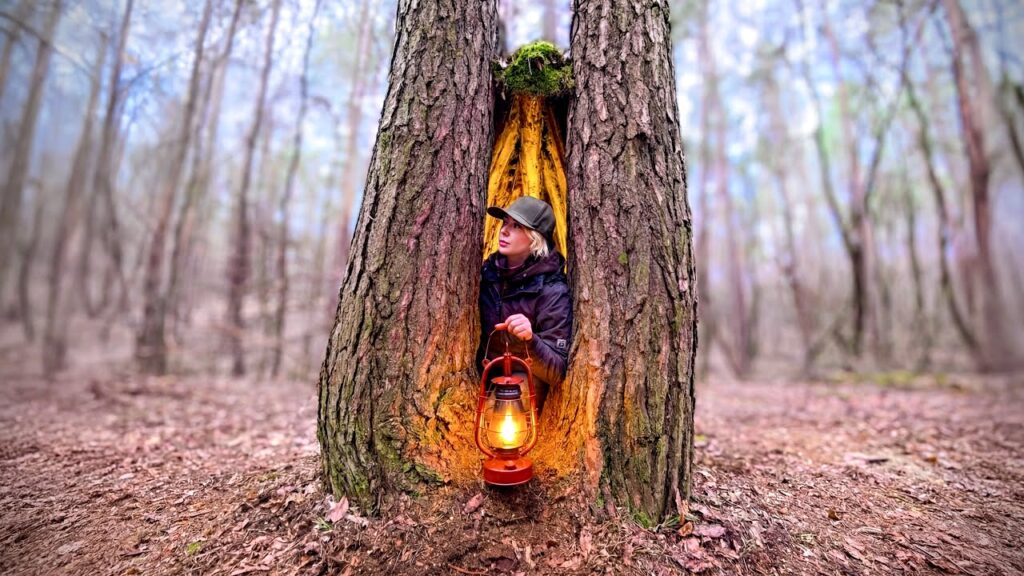
A wilderness content creator known as Mary in WILD has released a new video documenting the construction of a fully functional underground dugout shelter built between trees in a remote outdoor setting, showcasing the practical skills involved in bushcraft and survival living. In the video titled ‘Building a Warm and Cozy Secret Dugout Between Trees,’ Mary walks viewers through the entire shelter-building process, from selecting the right location among standing trees to excavating the ground and constructing a weatherproof, insulated structure capable of retaining warmth in cold outdoor conditions. The project highlights a range of traditional bushcraft techniques, including site selection, manual excavation, framing with natural materials, and roof construction designed to keep out moisture and wind. The finished dugout is presented as both a functional survival shelter and a remarkably comfortable hidden retreat tucked into the natural landscape. Mary in WILD, a channel dedicated to wilderness survival, bushcraft construction, and outdoor living, has built a following by documenting ambitious solo builds in natural environments. This latest project continues that tradition, combining practical survival knowledge with an aesthetic sensibility that emphasizes harmony with the surrounding environment. The choice to build between established trees is significant from a structural standpoint. Existing root systems and trunks can provide natural anchor points and additional stability for a dugout’s walls and roof framing, reducing the amount of additional material needed while increasing the shelter’s overall resilience against the elements. Digging into the earth also provides natural insulation. Soil maintains a relatively consistent temperature compared to above-ground air, meaning an underground or semi-underground shelter can stay noticeably warmer during cold nights and cooler during warm days — a principle long used in traditional earth shelter construction around the world. The video demonstrates not only the physical labor involved in such a project but also the planning and problem-solving required when working entirely with natural and hand-carried materials in a remote location. Viewers are shown how each phase of construction builds upon the last, from the initial dig to the final interior finishing that gives the shelter its cozy character. Interest in bushcraft and primitive shelter-building content has grown steadily across digital platforms in recent years, with audiences drawn to the combination of practical knowledge, meditative pacing, and the visual satisfaction of watching a structure rise from raw wilderness. The video is available on the Mary in WILD YouTube channel and serves as both an instructional resource and an engaging piece of outdoor content for survival enthusiasts and casual viewers alike. Source: Mary in WILD, YouTube — ‘Building a Warm and Cozy Secret Dugout Between Trees | Bushcraft, Survival’
The forest floor was cold, the trees dense, and the light filtering through the canopy was thin and pale. But Mary had a plan. Armed with hand tools, natural materials, and a patience that seems rare in the modern world, she set to work carving something extraordinary out of the earth itself — a secret dugout shelter tucked snugly between the trunks of standing trees. In her latest video published on her YouTube channel, Mary in WILD, the wilderness builder and bushcraft enthusiast documents the entire process of constructing a subterranean hideaway that manages to feel both ancient and ingeniously practical. From the first shovelful of earth to the final touches of a warming interior, the build is a masterclass in working with nature rather than against it. The location is deliberate. Choosing to anchor the shelter between two established trees gives the structure natural walls and a ready-made framework for the roof. Mary excavates the earth by hand, shaping a depression wide enough to move in but compact enough to hold warmth efficiently. Every decision is intentional — the angle of the entry, the layering of natural insulation, the way rainwater is considered and diverted before it becomes a problem. What follows is a meticulous layering process. Branches are lashed and stacked to create a roof skeleton, which is then covered with bark, leaves, and soil — materials that blend the structure seamlessly into the surrounding landscape. From just a few feet away, the finished shelter is nearly invisible, a quality that feels almost magical against the open woodland backdrop. Inside, the transformation is striking. What began as a hole in the ground becomes a genuinely cozy space. A small heat source warms the compact interior, and natural materials soften the walls and floor. The finished shelter radiates an unexpected sense of calm — a human-sized burrow that offers real protection against wind, cold, and rain. Mary narrates and demonstrates throughout with quiet confidence, explaining the reasoning behind each stage without unnecessary flourish. She does not overclaim. She simply builds, and the result speaks for itself. There is something deeply satisfying about watching a shelter take shape from raw forest materials — no hardware store runs, no power tools, no prefabricated panels. Just skill, observation, and effort applied steadily over time. The dugout that emerges from that process is not just functional. It is a small proof of what human ingenuity looks like when it slows down and listens to the land. For viewers drawn to wilderness living, survival skills, or simply the meditative rhythm of careful handwork, the build offers both practical instruction and something harder to name — a reminder that shelter, at its most essential, is something we are still fully capable of making ourselves. Source: Mary in WILD 𖣴, “Building a Warm and Cozy Secret Dugout Between Trees | Bushcraft, Survival